

Back to Where I Belong
People often ask me the same question:
“You studied, built a career, had opportunities outside the village — why did you choose farming?”
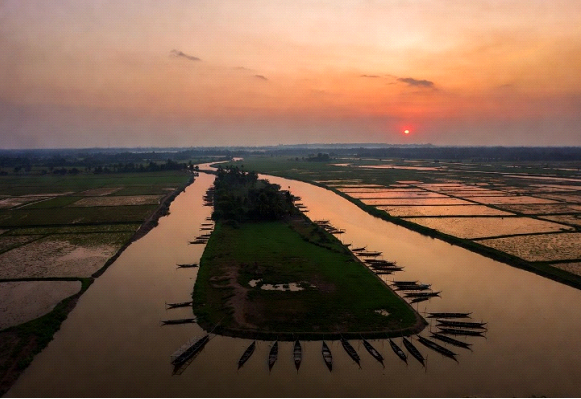
The answer doesn’t begin with a business plan. It begins much earlier, in the riverine char lands of Bhola, where the river decides almost everything: where a home can stand, where a crop can grow, and sometimes whether either survives the season. The land appears, disappears, and returns again. To most people, a char is an isolated place. To me, it was simply home.
Lorem ipsum dolor sit amet, consectetur adipiscing elit. Ut elit tellus, luctus nec ullamcorper mattis, pulvinar dapibus leo.Lorem ipsum dolor sit amet consectetur adipiscing elit dolor
John Doe
Back to Where I Belong
People often ask me the same question:
“You studied, built a career, had opportunities outside the village — why did you choose farming?”
The answer doesn’t begin with a business plan. It begins much earlier, in the riverine char lands of Bhola, where the river decides almost everything: where a home can stand, where a crop can grow, and sometimes whether either survives the season. The land appears, disappears, and returns again. To most people, a char is an isolated place. To me, it was simply home.
Lorem ipsum dolor sit amet, consectetur adipiscing elit. Ut elit tellus, luctus nec ullamcorper mattis, pulvinar dapibus leo.Lorem ipsum dolor sit amet consectetur adipiscing elit dolor
John Doe
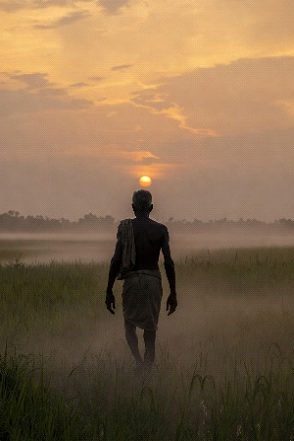
My father was a farmer. I remember following him into the fields before the sun had fully risen — a man who worked until his hands turned rough, who watched the sky more closely than any calendar, who believed that if he cared for the land, the land would care for his family. As a child, I didn’t understand the science or the economics behind any of it. I just saw someone showing up, every morning, for something larger than himself.
It took growing older to understand how unforgiving that devotion really was. I watched crops flourish for months and vanish overnight — to a flood, a nor’wester, a storm, a shifting riverbank. I watched farmers celebrate a good harvest at sunrise and worry by sunset, because the buyers offering to take it away weren’t offering enough to cover what it cost to grow. Growing the food was never the hard part. Surviving everything that came after it was.
Leaving, and looking back
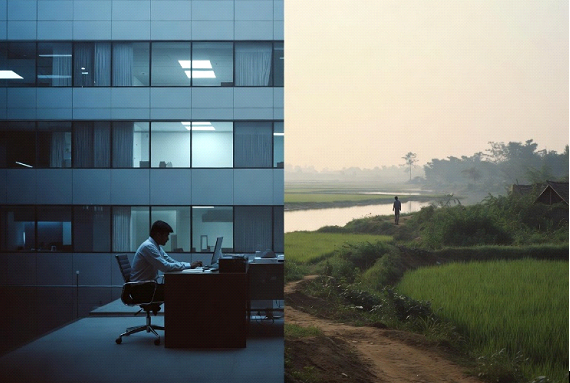
Like many young people, I believed education would lead me toward a stable professional life. I completed my graduation at the Bangladesh University of Professionals (BUP) and later my post-graduation at the University of Dhaka (DU). After that, I stepped into the corporate world and experienced an entirely different environment—structured offices, meetings, reports, and predictable routines. It was valuable experience, and I learned lessons that continue to guide me today. But every time I went home, I noticed the same thing, unchanged. The same farmers were fighting the same battles. The land was as fertile as it had ever been. The only thing that had changed was that the young people were gone.
Whenever someone from the village graduated, the script rarely varied: find a government job, build a career in the city, come home for the holidays. Success meant distance from agriculture, measured almost literally in kilometers. I understood that thinking, because I’d once believed it myself. But one question kept following me home and refusing to leave with me:
If everyone who receives education leaves, then who will solve the problems that education was meant to solve?
I didn’t think agriculture lacked potential. I thought it lacked people willing to bring new ideas back to it — without discarding the knowledge already sitting in the hands of the people who’d farmed that land for generations.
The decision
Choosing to return wasn’t one dramatic moment — it was a string of difficult conversations, with my family and with myself. Some people asked why I’d trade a secure career for something as uncertain as farming. Others thought I was wasting an education. Honestly, I wasn’t always sure they were wrong. Agriculture doesn’t negotiate. Nature doesn’t wait for your five-year plan, and markets don’t pause for your mistakes. Every decision carries real risk, in real money and real livelihoods.

I still remember the night my boats went down in a nor’wester, carrying thousands of watermelons that never reached the market. Months of work, gone beneath the river in a few hours. There were seasons like that — crops that failed, logistics that broke, buyers who never showed. There were plenty of days when walking away would have been the easier choice. But each of those failures taught me something no classroom could have: the farmers around me were never short on determination. What they lacked was access — to knowledge, to financing, to technology, to a market that would actually pay them what their harvest was worth.
What became of it
That single realization changed how I saw the whole problem. Our future wasn’t going to be built by growing more crops. It was going to be built by building the ecosystem around the crop — one where farmers could earn what their work was worth, where young people could see farming as a profession with real dignity, and where the char lands could finally be recognized for what they are, instead of what they’re assumed to be.
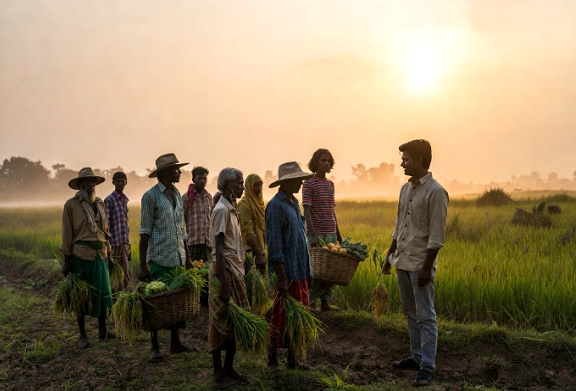
That idea became FORAZI Agro Livestock Limited — not because I wanted to start another agricultural company, but because I wanted to build the kind of organization I wish had existed when I was a boy watching my father work those fields. Today, every decision we make still traces back to those early mornings with him: respect the land, respect the people who work it, and remember that farming was never just about the harvest. It was always about families, communities, and what comes after.
I don’t think the char lands are places to escape. I think they’re places worth investing in — fertile soil, resilient people, and possibility that’s gone unmet for a long time, not for lack of potential but for lack of opportunity. FORAZI is my attempt to build more of it: connecting farmers to fairer markets, encouraging sustainable practices, creating work at home, and proving that innovation doesn’t only happen in cities.
This was never about leaving one career for another. It was about returning to where the story started. I’m still the son of a farmer. The only difference is that I now carry the same hope he carried into those fields every morning — that the next generation never has to choose between an education and the place they call home.
If this journey works, I don’t need to be remembered as the founder of a company. I’d rather be remembered as someone who came back.
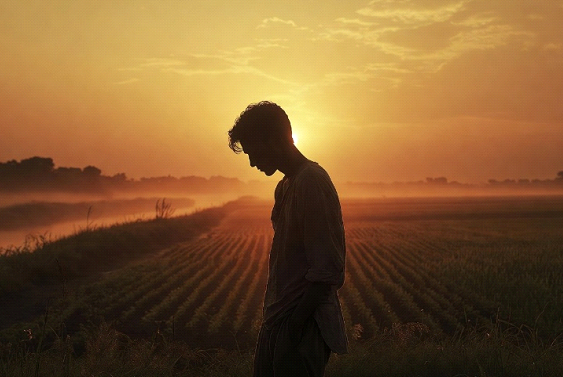
My father was a farmer. I remember following him into the fields before the sun had fully risen — a man who worked until his hands turned rough, who watched the sky more closely than any calendar, who believed that if he cared for the land, the land would care for his family. As a child, I didn’t understand the science or the economics behind any of it. I just saw someone showing up, every morning, for something larger than himself.
It took growing older to understand how unforgiving that devotion really was. I watched crops flourish for months and vanish overnight — to a flood, a nor’wester, a storm, a shifting riverbank. I watched farmers celebrate a good harvest at sunrise and worry by sunset, because the buyers offering to take it away weren’t offering enough to cover what it cost to grow. Growing the food was never the hard part. Surviving everything that came after it was.
Leaving, and looking back
Like many young people, I believed education would lead me toward a stable professional life. I completed my graduation at the Bangladesh University of Professionals (BUP) and later my post-graduation at the University of Dhaka (DU). After that, I stepped into the corporate world and experienced an entirely different environment—structured offices, meetings, reports, and predictable routines. It was valuable experience, and I learned lessons that continue to guide me today. But every time I went home, I noticed the same thing, unchanged. The same farmers were fighting the same battles. The land was as fertile as it had ever been. The only thing that had changed was that the young people were gone.
Whenever someone from the village graduated, the script rarely varied: find a government job, build a career in the city, come home for the holidays. Success meant distance from agriculture, measured almost literally in kilometers. I understood that thinking, because I’d once believed it myself. But one question kept following me home and refusing to leave with me:
If everyone who receives education leaves, then who will solve the problems that education was meant to solve?
I didn’t think agriculture lacked potential. I thought it lacked people willing to bring new ideas back to it — without discarding the knowledge already sitting in the hands of the people who’d farmed that land for generations.
The decision
Choosing to return wasn’t one dramatic moment — it was a string of difficult conversations, with my family and with myself. Some people asked why I’d trade a secure career for something as uncertain as farming. Others thought I was wasting an education. Honestly, I wasn’t always sure they were wrong. Agriculture doesn’t negotiate. Nature doesn’t wait for your five-year plan, and markets don’t pause for your mistakes. Every decision carries real risk, in real money and real livelihoods.
I still remember the night my boats went down in a nor’wester, carrying thousands of watermelons that never reached the market. Months of work, gone beneath the river in a few hours. There were seasons like that — crops that failed, logistics that broke, buyers who never showed. There were plenty of days when walking away would have been the easier choice. But each of those failures taught me something no classroom could have: the farmers around me were never short on determination. What they lacked was access — to knowledge, to financing, to technology, to a market that would actually pay them what their harvest was worth.
What became of it
That single realization changed how I saw the whole problem. Our future wasn’t going to be built by growing more crops. It was going to be built by building the ecosystem around the crop — one where farmers could earn what their work was worth, where young people could see farming as a profession with real dignity, and where the char lands could finally be recognized for what they are, instead of what they’re assumed to be.
That idea became FORAZI Agro Livestock Limited — not because I wanted to start another agricultural company, but because I wanted to build the kind of organization I wish had existed when I was a boy watching my father work those fields. Today, every decision we make still traces back to those early mornings with him: respect the land, respect the people who work it, and remember that farming was never just about the harvest. It was always about families, communities, and what comes after.
I don’t think the char lands are places to escape. I think they’re places worth investing in — fertile soil, resilient people, and possibility that’s gone unmet for a long time, not for lack of potential but for lack of opportunity. FORAZI is my attempt to build more of it: connecting farmers to fairer markets, encouraging sustainable practices, creating work at home, and proving that innovation doesn’t only happen in cities.
This was never about leaving one career for another. It was about returning to where the story started. I’m still the son of a farmer. The only difference is that I now carry the same hope he carried into those fields every morning — that the next generation never has to choose between an education and the place they call home.
If this journey works, I don’t need to be remembered as the founder of a company. I’d rather be remembered as someone who came back.